It’s 7 a.m. in Bethesda, your throat is on fire, and you have three options: call a doctor for a same-day sick visit, walk into an urgent care on the Wisconsin Avenue corridor, or — if things are genuinely scary — head to Suburban Hospital’s emergency room. Most people default to urgent care out of habit, and much of the time that’s the slower, more expensive, less informed choice.
Here’s how to pick the right door, and what “same-day doctor in Bethesda” actually looks like in practice.
The three doors, at a glance
When a same-day sick visit is the right call
For the ordinary miseries — fever, sore throat, cough, sinus pressure, earache, UTI symptoms, pink eye, a rash — your own primary care doctor is usually the best first call, for three reasons:
- They know your history. Your medication list, allergies, chronic conditions, and last strep test are already in the chart. An urgent care clinician starts from zero, which is how duplicate tests and conflicting prescriptions happen.
- It’s the cheapest visit you can have. Under most plans, a primary care sick visit carries the lowest copay of any option — typically well below urgent care, and an order of magnitude below an emergency department bill for the same sore throat.
- The record stays where it belongs. Whatever gets diagnosed and prescribed lands in the chart your doctor works from at your next physical, instead of in a standalone urgent-care system that may never send the note.
The catch, of course, is access — and this is where Bethesda is better served than most places. Hybrid “primary and immediate care” clinics like CloseKnit are built around same- and next-day access: Lauren Sigmon, PA-C on Old Georgetown Road sees patients same- or next-day in person and by telehealth across Maryland, and family physicians Dr. Bahiyyih Clarke on Wisconsin Avenue and Dr. Alvia Sabahat in North Bethesda treat everyone from infants to seniors. Large groups such as Johns Hopkins Community Physicians in downtown Bethesda typically reserve same-day slots for established patients — one more argument for getting established before you’re sick.
Don’t overlook the video option either: Maryland’s telehealth parity law requires insurers to cover virtual visits comparably to in-person care, and a same-morning video visit handles a surprising share of sick-day complaints. Our guide to in-person and telemedicine appointments covers which symptoms translate well to video and which don’t.
When urgent care genuinely wins
Urgent care exists for the gaps, and it fills them well:
- After hours and weekends. When it’s Saturday night and your doctor’s office reopens Monday, the walk-in clinics along the Wisconsin Avenue and Rockville Pike corridors are the practical answer.
- You need equipment your doctor’s office doesn’t have. A possible fracture or sprain that needs an X-ray, or a cut that needs stitches, is squarely urgent-care territory.
- You don’t have a doctor here yet. New to the area, between physicians, or your practice can’t fit you in for days — urgent care beats waiting.
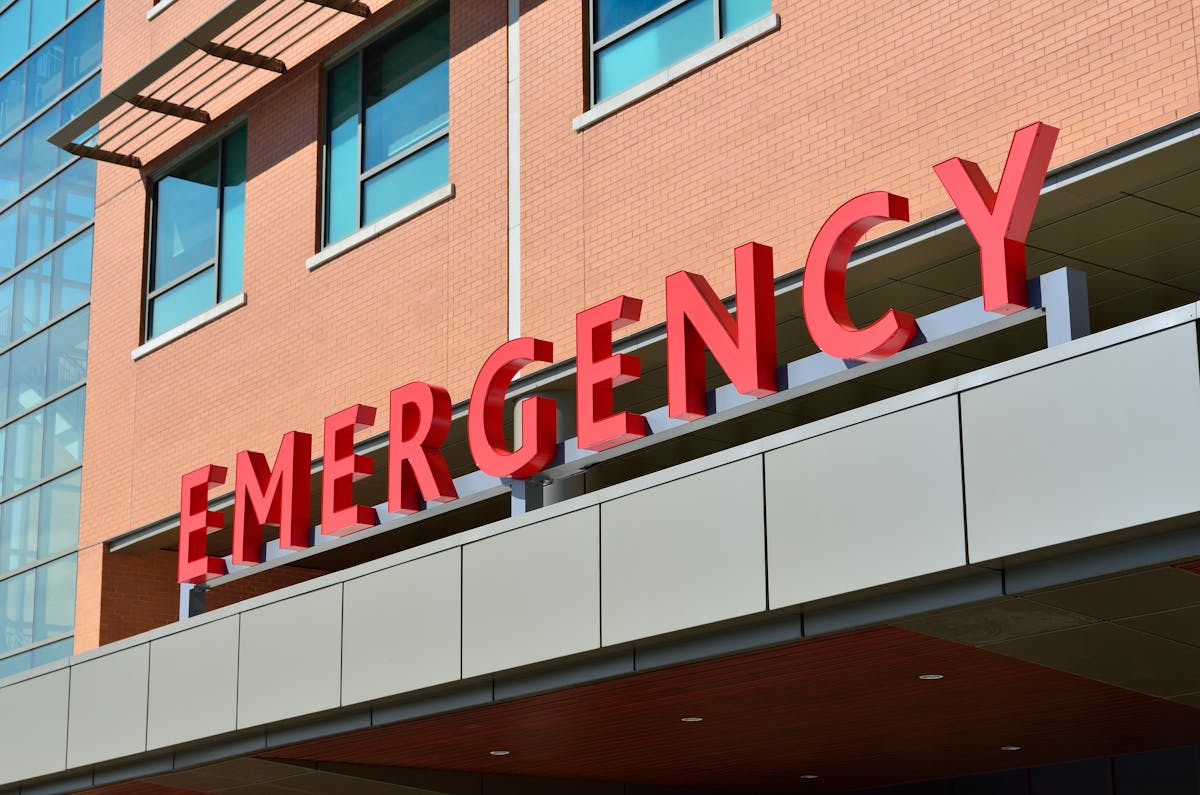
One local quirk worth knowing: Bethesda is famous for its medical institutions, but the NIH Clinical Center and Walter Reed are research and military facilities — neither is a walk-in option for your strep throat. For civilians, the walk-in tier is the retail and health-system urgent care clinics, and the emergency tier is Suburban Hospital (Johns Hopkins Medicine) on Old Georgetown Road.
Two habits make urgent care work better when you do use it: bring your medication list, and ask the clinic to fax or send the visit summary to your primary care doctor — it rarely happens automatically.
The cost ladder, plainly
For the same minor illness, the typical out-of-pocket ranking under commercial insurance is consistent: primary care sick visit < telehealth or urgent care < emergency room, with the ER often costing ten times the primary care visit or more once facility fees land. Emergency departments are priced — appropriately — for emergencies. Using Suburban’s ER for a sinus infection doesn’t just cost more; it also puts you behind every chest pain and stroke case in the triage queue, as it should.
When it’s the ER, it’s the ER
None of the arithmetic above applies to true emergencies. Chest pain or pressure, one-sided weakness or facial droop, slurred speech, real difficulty breathing, uncontrolled bleeding, severe abdominal pain, a head injury with confusion, fainting — go to the emergency room or call 911, immediately. Minutes matter for hearts and brains, and no copay comparison is worth a delay (CDC: emergency department care).

The real fix: have your doctor before you need them
Every option above improves when you’re an established patient somewhere. Same-day slots go to people already in the system; telehealth follow-ups need a chart to follow up on. If you don’t yet have a primary care doctor in the area:
- Dr. Mi Na Son at Johns Hopkins Community Physicians in downtown Bethesda is notably new-patient friendly, with care in three languages.
- Dr. Robert Clark at MedStar Health Primary Care on Rockledge Drive is a strong conventional internal-medicine choice within the MedStar system.
- In Silver Spring, Dr. Kathryn Kelly of Kelly Collaborative Medicine pairs a large, loyal patient following with membership options.
- If guaranteed same-day access is the whole point for you, concierge internists like Dr. Matthew Mintz build it into the model — we weigh the tradeoffs in is concierge medicine in Bethesda worth it?
Where to start
- Browse the best primary care doctors in Bethesda or the full primary care & internal medicine list.
- Prefer one doctor for the whole household? See our family medicine picks.
- New to the search? Start with how to choose a primary care doctor in Bethesda.
- Parents: sick-season logistics pair well with our guide to school and camp physicals in Montgomery County.
Sources & further reading
- HealthCare.gov — where to go for care: ER vs urgent care
- CDC / National Center for Health Statistics — emergency department visits
- Maryland General Assembly — Preserve Telehealth Access Act (coverage parity)
- Johns Hopkins Medicine — Suburban Hospital emergency services